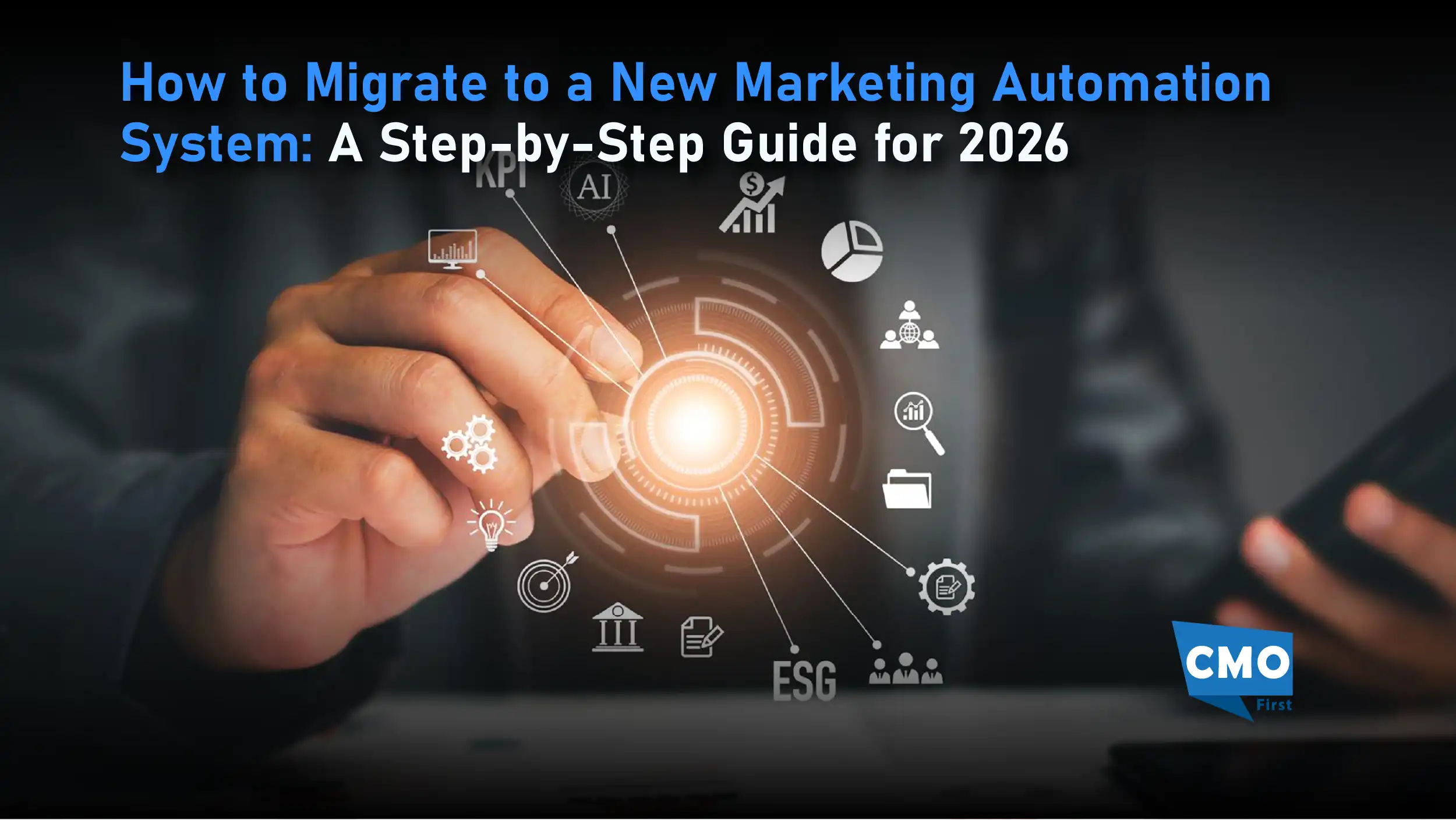
What will you do if you find that your migration process has been completed, but there are no conversions to sales, the information on your clients is missing, and your campaigns have failed? The thing is that all this happens prior to the launch, since the team treats it as a software issue, while in reality, it is a business issue.
Migration to another marketing automation platform involves much more than just importing your contacts and duplicating your campaigns. It requires a strategy on how to ensure quality, integration, compliance and continuity of campaigns. A great migration will preserve current activities and enhance reporting, lead routing and campaign performance.
All you need to successfully plan, run, test and optimize your migration so that you don’t carry problems from the old site forward.
Prior to picking migration dates and migrating data, determine the criteria on which the new marketing automation system will be better than the existing one. In case of issues related to reporting, lead management and campaigns of the existing solution, these can become KPIs for measuring success. Reporting quality, speed of lead management and campaign performance are some KPIs that could be used for that purpose.
Also Read: Airship Advances AI for Real-Time Customer Experiences
Pick a cross functional team that Marketing Operations should engage and what is required to be addressed by the campaign IT should take care of Technical Architecture, integrations, access control The CRM for Sales needs to examine Lead fields, data flight, sync, and third party validation legal should verify consent data, data operations and then satisfy existing obligations with GDPR, CCPA. Owner each piece. Otherwise decisions are being pushed on to the next group.
Finally, create an action plan for the 60–90 days to come. Start with requirement review and Acceptance success validation, followed by data upgrade, platform build and configuration, integrations, testing, and finally the cutover (make sure to factor in any unforeseen data problems and signoff by stakeholders). The shorter project schedule will get your new platform operational sooner, but will also have less time to discover problems that could otherwise affect your production campaigns. The goal is a managed transition with defined accountability and agreed benchmarks, and enough time to ensure each step is completed successfully.